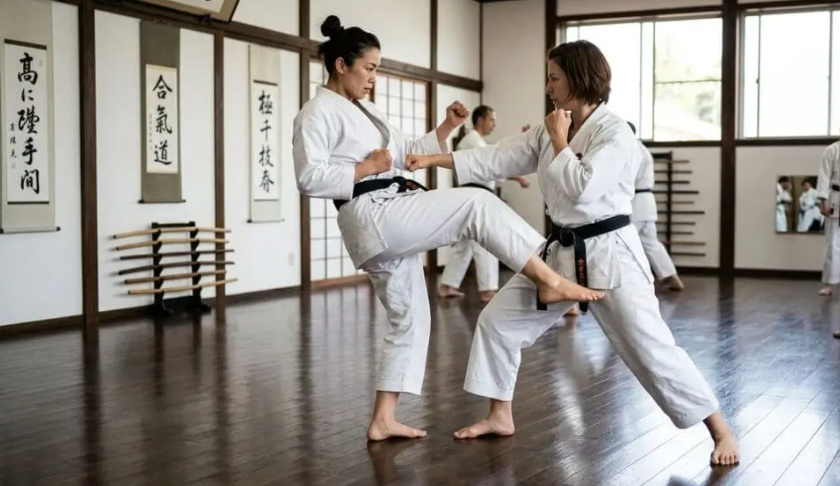
Starting karate can be an exciting experience for both adults and children. However, walking into a martial arts school for the first time can also bring questions. What should you wear? Is karate difficult for beginners? Do you need to be fit before starting? What happens during the first class?
The good news is that beginners are not expected to know everything before they arrive. A well-organized class introduces techniques gradually and gives students time to become comfortable with the training environment. Whether you are considering karate for yourself or your child, understanding what to expect can make the first experience much easier.
What Is Karate?
Karate is a martial art that combines physical techniques with discipline, coordination, movement, and mental focus.
Depending on the style and school, students may practice:
- Punches
- Kicks
- Blocks
- Stances
- Footwork
- Forms or kata
- Partner drills
- Controlled sparring
- Conditioning exercises
Different karate lessons schools may have different teaching methods, so the exact class experience can vary.
For beginners, the focus is usually on learning fundamental movements correctly rather than attempting advanced techniques immediately.
You Do Not Need to Be Fit Before Starting
One of the biggest concerns adults have is whether they are physically fit enough to begin.
You do not need to be in excellent shape before taking your first karate class.
Beginners may have different fitness levels, ages, flexibility, and physical abilities. A good instructor should provide exercises that allow students to gradually improve.
You may initially find certain movements tiring or unfamiliar. That is normal.
With consistent training, you can gradually work on:
- Stamina
- Strength
- Flexibility
- Balance
- Coordination
- Mobility
The important thing is to start at a comfortable level and progress gradually.
What Should You Wear?
For a first class, many schools allow beginners to wear comfortable athletic clothing.
Depending on the school’s rules, this may include:
- A T-shirt
- Athletic pants
- Shorts of appropriate length
- Comfortable training clothes
Students typically train barefoot on a suitable floor, although requirements can vary.
Once you decide to continue, the instructor can explain when and how to obtain a traditional karate uniform, commonly called a gi.
It is always useful to ask about clothing requirements before your first class.
What Happens During the First Class?
A beginner’s first class may include several different activities.
You might start with a warm-up designed to prepare your muscles and joints for movement.
After that, the instructor may introduce basic karate positions and techniques.
A typical beginner session can include:
- Warm-up exercises
- Basic stances
- Simple punches
- Basic blocks
- Beginner kicks
- Footwork
- Technique repetition
- Stretching
- Cool-down activities
Some schools may also introduce basic forms or partner exercises.
The first class is primarily about becoming familiar with the environment and learning the fundamentals.
Expect to Feel a Little Awkward
Almost everyone feels awkward when learning something completely new.
You may have difficulty remembering which foot to move first or how to position your hands. You may also notice that experienced students move more naturally.
Do not let this discourage you.
Experienced students have had much more practice.
Your goal during the first few classes is not to look advanced. It is to listen, learn, and become more comfortable.
Adults Can Start Karate at Any Experience Level
Adults sometimes assume martial arts are mainly for children or young athletes.
That is not the case.
Adults can begin karate lessons with no previous martial arts experience.
Some adults train for fitness, while others are interested in self-defense, discipline, stress management, competition, or learning a new skill.
The instructor should be able to explain beginner techniques in a way that is appropriate for your current ability.
Parents Should Prepare Children Mentally
Children may feel nervous before their first martial arts class.
Parents can make the experience easier by explaining what will happen without creating unrealistic expectations.
Tell your child that:
- They do not need to know karate already.
- Making mistakes is normal.
- The instructor will teach them.
- They can ask questions.
- They should listen carefully.
- They should treat classmates respectfully.
Avoid telling a child that they must immediately perform perfectly.
The goal is to help them approach the first class with curiosity rather than pressure.
Respect Is a Major Part of Karate
Karate training is not only about physical movements.
Students are generally expected to demonstrate respect toward instructors and training partners.
This can include:
- Listening while the instructor is speaking
- Following class rules
- Waiting for instructions
- Treating partners carefully
- Avoiding unnecessary physical contact
- Showing good sportsmanship
For children, these habits can help create a structured learning environment.
Adults can also benefit from the discipline required to consistently follow a training routine.
Learning Stances and Basic Movement
One of the first things beginners may notice is that karate places significant attention on body positioning.
Students may practice different stances and learn how to move while maintaining balance and control.
These fundamentals may seem simple at first, but they create the foundation for more advanced techniques.
Good instruction focuses on proper form rather than rushing students into complicated movements.
Don’t Worry About Memorizing Everything
There may be a lot of information during your first class.
You might hear unfamiliar terminology and be introduced to several movements.
You are not expected to remember everything immediately.
Repetition is a major part of martial arts training.
Over time, techniques that initially require conscious thought can become more familiar.
If you forget something, simply pay attention to the instructor and try again.
Karate Can Be a Good Workout
Although karate focuses on technique, classes can also provide physical exercise.
Depending on the program, students may spend time practicing:
- Kicks
- Punches
- Footwork
- Movement combinations
- Bodyweight exercises
- Flexibility drills
- Conditioning
The intensity can vary from one school to another.
For adults, karate can provide an alternative to traditional gym workouts. For children, it can offer an active way to develop coordination and body awareness.
What About Self-Defense?
Many people begin karate because they are interested in self-defense.
Karate can introduce students to striking techniques, defensive movements, distance management, and body control.
However, beginners should understand that martial arts training is not a guarantee of safety in every real-world situation.
Practical personal safety also involves:
- Awareness
- Avoiding unnecessary conflict
- Setting boundaries
- Verbal communication
- Creating distance
- Leaving unsafe situations
- Asking for help
A responsible instructor should emphasize appropriate use of physical techniques rather than encouraging students to look for fights.
Children Should Learn Control
Parents sometimes worry that martial arts will make their child aggressive.
A well-run children’s program should teach the opposite.
Children should learn that physical techniques require responsibility and control.
They should understand that karate skills are for structured practice and appropriate situations, not for intimidating classmates or solving everyday disagreements through physical force.
Respect and self-control should be part of the training from the beginning.
Understand the Belt System
Many karate schools use a belt-ranking system to show a student’s progression.
The exact colors and requirements can differ between organizations.
Beginners may start with a white belt and gradually progress through different levels as they demonstrate knowledge and skill.
The belt system can give students clear goals, but it is important not to become overly focused on rank.
The most valuable progress often comes from improving technique, confidence, discipline, and understanding.
Sparring May Come Later
Beginners sometimes worry that they will be expected to fight another student during their first class.
That is not necessarily the case.
Many programs introduce sparring gradually, particularly for beginners and children.
Before students participate in more active partner work, they may first learn basic techniques, control, movement, and safety procedures.
When sparring is introduced, it should be appropriately supervised and conducted according to the school’s rules.
Ask Questions Before Joining
Parents and adults should feel comfortable asking questions before enrolling.
Useful questions include:
- What classes are available for beginners?
- What age groups do you teach?
- How long is each class?
- What should I wear?
- Is there a beginner trial class?
- How often should students train?
- When is sparring introduced?
- What equipment will be required?
- How does belt progression work?
Clear answers can help you understand whether the program is suitable.
Pay Attention to the Instructor
The instructor can have a major influence on the quality of the experience.
Look for someone who:
- Explains techniques clearly
- Demonstrates movements properly
- Corrects students respectfully
- Prioritizes safety
- Encourages beginners
- Maintains appropriate discipline
- Adjusts exercises when necessary
Children especially benefit from instructors who understand different learning styles and personalities.
Choose a Comfortable Training Environment
The atmosphere of a martial arts school matters.
A beginner-friendly environment should feel organized and respectful.
Notice how students interact with each other. Are beginners welcomed? Are instructors patient? Are students encouraged to improve rather than embarrassed for making mistakes?
You want a place where you or your child can feel comfortable returning regularly.
Consistency Matters More Than Intensity
You do not need to train extremely hard every day to make progress.
Regular attendance can be more useful than occasional intense sessions.
For adults with busy schedules, attending a manageable number of classes each week may be easier to maintain.
Children also need enough time for school, rest, family activities, and other responsibilities.
A sustainable routine makes it easier to continue learning.
Parents Should Let Children Progress at Their Own Pace
Not every child will advance at the same speed.
One child may quickly memorize forms, while another may need more time.
Avoid comparing your child with classmates.
Instead, focus on personal improvement.
You can encourage your child by noticing things such as:
- Better concentration
- Improved coordination
- More confidence
- Greater patience
- Consistent attendance
- Willingness to try difficult movements
These achievements are valuable regardless of belt level.
What Beginners Should Bring to Their First Class
You usually do not need a large amount of equipment for your first session.
Depending on the school’s requirements, you may simply need:
- Comfortable clothing
- Water
- A positive attitude
- Willingness to listen
- A small towel if needed
Avoid purchasing expensive equipment before understanding what the school actually requires.
The instructor can explain what you need once you decide to continue.
Be Patient With Your Progress
Karate is a skill-based activity, and meaningful progress takes time.
Some movements may feel difficult at first.
Instead of asking, “Why can’t I do this yet?” try focusing on what has improved since your previous class.
Progress may appear in small ways:
- Your stance becomes more stable.
- Your kicks become more controlled.
- You remember techniques more easily.
- Your balance improves.
- You feel less nervous during class.
These small improvements eventually add up.
Conclusion
Starting karate does not require previous martial arts experience, exceptional fitness, or perfect flexibility. Adults and children can enter beginner programs and gradually develop their skills through consistent practice.
For anyone considering karate lessons, the first class should be viewed as an opportunity to learn and explore rather than a test of ability. Expect to make mistakes, ask questions, and take time to become familiar with the movements.
Parents should look for a safe and respectful environment where children are encouraged to develop discipline and confidence without unnecessary pressure. Adults should choose a program that fits their goals, schedule, and current fitness level.
With patience, regular practice, and good instruction, the first karate class can become the beginning of a rewarding long-term activity.