
In today’s competitive academic and economic landscape, the “working student” is no longer the exception—it is the standard. According to the National Center for Education Statistics (NCES), approximately 40% of full-time undergraduates and 74% of part-time students are employed while pursuing their degrees. For many, this isn’t about pocket money; it’s about survival, with nearly 49% of students reporting they are financially independent from their parents.
The Balancing Act: Why Time Management is Non-Negotiable
The stakes have never been higher. A 2025 report by the Higher Education Policy Institute (HEPI) revealed that 68% of full-time students now work during term time, a dramatic rise from 42% just five years ago. This shift has led to a “time-poverty” epidemic. When you are juggling a 20-hour work week alongside a 15-credit semester, the margin for error disappears. Without a rigorous strategy, academic performance often suffers; research indicates that students working more than 20 hours per week are 18% more likely to experience burnout and significantly lower graduation rates.
Effective time management isn’t just about “doing more”—it’s about protecting your mental health. If you find yourself drowning in deadlines, seeking professional help assignment resources can provide the breathing room needed to recalibrate your schedule. By delegating complex tasks or seeking expert guidance, you can shift your focus back to high-priority learning and career development.
Data-Driven Strategies for Success
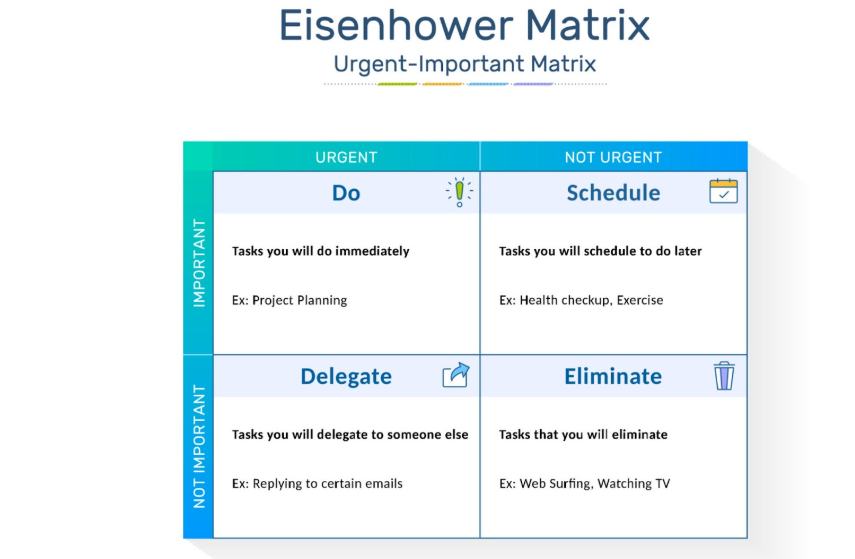
To succeed in 2026, students must move beyond simple to-do lists. Statistics show that while 82% of people do not have a formal time management system, those who use structured methods like the Eisenhower Matrix feel 50% more in control of their daily tasks.
The Eisenhower Matrix (Urgency vs. Importance)
This framework helps you categorize tasks into four quadrants:
- Quadrant 1 (Do First): Urgent and Important (e.g., an essay due tomorrow).
- Quadrant 2 (Schedule): Important but not Urgent (e.g., long-term exam prep).
- Quadrant 3 (Delegate): Urgent but not Important (e.g., minor errands).
- Quadrant 4 (Eliminate): Neither (e.g., mindless social media scrolling).
Time Blocking and “Flex” Windows
Generic schedules fail because they don’t account for life’s unpredictability. Time blocking involves assigning fixed hours for work and class, then filling gaps with “deep work” sessions. However, the most successful students include “Flex Blocks”—2-hour windows each week reserved specifically for unexpected work shifts or difficult coursework.
Strategic Academic Outsourcing
There are moments when the “Strategic No” applies to your own workload. When professional responsibilities overlap with finals week, many students choose to pay for homework services to ensure they maintain their GPA without sacrificing their job security. This form of academic delegation is increasingly common; a 2025 survey found that 47% of students cite time management as their top challenge, leading many to seek external support to avoid the 40% higher drop-out risk associated with chronic burnout
The High Cost of Burnout
The physical and mental toll of mismanagement is quantifiable. Recent data from WifiTalents (2026) suggests that 50% of college students report experiencing academic burnout. Symptoms like irritability, sleep deprivation (affecting 77% of students), and a decline in GPA are clear indicators that the balance has tipped too far.
| Metric | Impact on Working Students |
| Sleep Deprivation | 2.5x increase in burnout risk |
| Financial Stress | Cited by 64% as the primary driver of anxiety |
| Work Interference | 56% say jobs hinder campus social engagement |
| Success Rate | Students working <15 hours/week have the highest completion rates |
Practical Tips for the Modern Working Student
- Leverage Technology: Use apps like Notion or Trello to keep all deadlines in a “single source of truth.”
- Communicate Early: Inform your employer of your exam schedule at the start of the semester.
- The 5-Minute Rule: If you’re procrastinating, commit to working for just five minutes. Research shows this often breaks the mental barrier to starting.
- Protect Your Sleep: Sleep-deprived students are 59% more likely to feel irritable and nervous, which directly impairs cognitive function during both work and study.
See also: The Essential Role of Student Guidance in Higher Education
FAQs
Q1: Is it possible to work 40 hours a week and study full-time?
While possible, it is high-risk. Research from the Lumina Foundation shows that working full-time significantly reduces degree completion rates. If you must work full-time, consider a reduced course load or leveraging online learning for more flexibility.
Q2: How do I know if I’m burnt out or just tired?
Burnout is characterized by emotional exhaustion, cynicism toward your studies, and a sense of “inefficacy” (feeling like your efforts don’t matter). If a weekend of rest doesn’t help, you are likely facing burnout.
Q3: Does working while studying help my career?
Yes. Studies show that students who work in roles related to their major have higher post-graduation employment rates and better “transferable skills” like teamwork and professionalism.
References
National Center for Education Statistics (NCES). (2025). College Student Employment Trends.
Higher Education Policy Institute (HEPI). (2025). Student Academic Experience Survey.
Lumina Foundation. (2024). Facts About Working Full-Time as a Student.
Mental Health UK. (2025). The Burnout Report: Generational Divide in Stress Levels.
Author Bio
Alex Sterling is a Senior Academic Strategist and Lead Researcher at MyAssignmentHelp, bringing over a decade of expertise in Educational Technology and student success. Alex specializes in data-driven lifestyle optimization for adult learners and has been featured in leading EdTech journals for pioneering work in academic efficiency. When not analyzing student performance trends, Alex consults for global universities on improving support systems and accessibility for non-traditional students.